








Table of Contents
- Background of the Verdict
- Which Court Sentenced Her
- Charges That Led to the Death Penalty
- India’s Reaction and Hasina’s Stay in Delhi
- Bangladesh’s Demand for Extradition
- Hasina’s Response to the Ruling
- Political and Regional Impact
1. Background of the Verdict
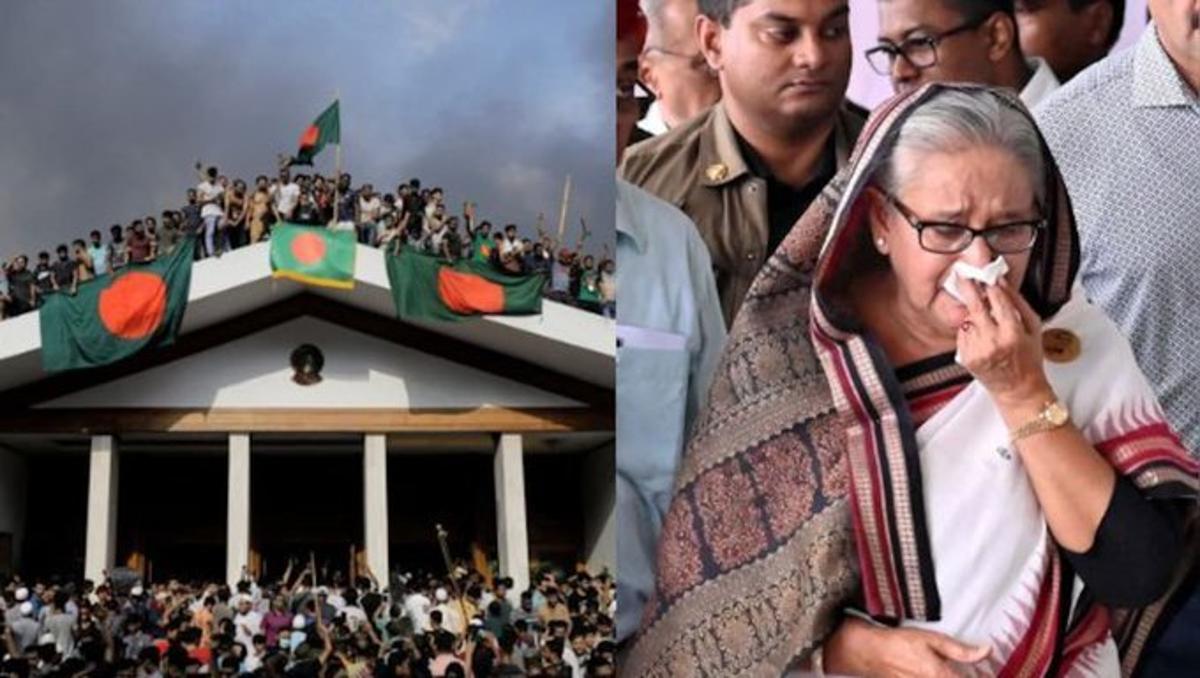
Former Bangladesh Prime Minister Sheikh Hasina has been sentenced to death in absentia in connection with the violent student protests in Dhaka last year. These protests forced her from power, leading to her escape to India, where she has been living in a protected safe house in New Delhi.
The verdict marks a major turn in Bangladeshi politics, with the tribunal ruling that her actions during the unrest amounted to crimes against humanity.
2. Which Court Sentenced Her
The ruling was delivered by the International Crimes Tribunal – 1 (ICT-1) of Bangladesh. This special court has the authority to try individuals for serious offences such as crimes against humanity, genocide, torture, and other grave violations.
ICT-1 conducted the investigation, heard the charges, and issued the final judgment sentencing her to death.
Watch the moment Bangladesh’s ousted Prime Minister Sheikh Hasina is sentenced to death for crimes against humanity after her crackdown on a student uprising last year killed hundreds of people. pic.twitter.com/bUVMgDQAet
— The Associated Press (@AP) November 17, 2025
3. Charges That Led to the Death Penalty
The tribunal found Sheikh Hasina guilty on three major charges:
1. Incitement
She was accused of fueling the unrest and encouraging an atmosphere that escalated the violence during the student movement.
2. Order to Kill
According to the tribunal, she authorized the use of lethal force during the protests, resulting in multiple deaths and injuries.
3. Inaction to Prevent Atrocities
The court held that she failed to prevent abuses committed by security forces and bore responsibility as the head of government.
“We have decided to inflict her with only one sentence — the sentence of death,” the tribunal declared.
4. India’s Reaction and Hasina’s Stay in Delhi
India responded by stating it had noted the verdict and reaffirmed its commitment to peace and stability in Bangladesh. India did not confirm whether it would return Hasina, stating it would continue “engaging constructively with all stakeholders.”
Since fleeing Bangladesh, Hasina has been living in a confidential safe house in New Delhi, as confirmed by her family.
5. Bangladesh’s Demand for Extradition
Bangladesh has sent an official request to India to extradite Sheikh Hasina, describing her as a “fugitive accused.” The request cites the bilateral extradition agreement, claiming India is obligated to send her back.
Bangladesh also stated that offering refuge to someone convicted of crimes against humanity would be considered unfriendly and against the principles of justice.
6. Hasina’s Response to the Ruling
Sheikh Hasina has strongly rejected the verdict, calling the tribunal “rigged” and the current government “unelected and without a democratic mandate.” She denied all charges, claiming that the case was politically motivated.
She argued that the tribunal did not provide her a fair chance to defend herself and that the judgment was predetermined.
7. Political and Regional Impact
The verdict is expected to reshape Bangladesh’s political environment, deepening divisions between government supporters and those loyal to Hasina.
The extradition request places India in a complex diplomatic position, potentially influencing regional relations and long-term stability.
The ruling also highlights the ongoing struggle between justice, political power, and public trust in the region.
ALSO READ : Nowgam Blast: Nine Lives Lost in Srinagar’s Tragic Accident