








The release of millions of documents related to Jeffrey Epstein has created intense public interest across the world. While the information is officially public, accessing and understanding it has proven difficult for most people.
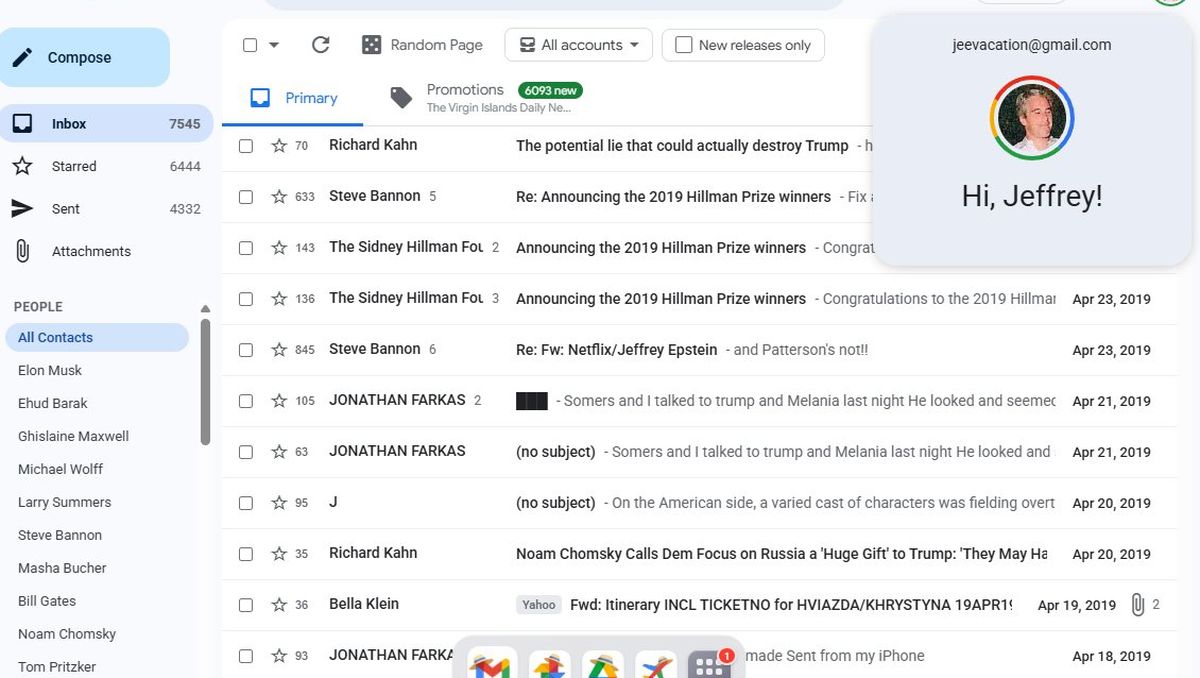
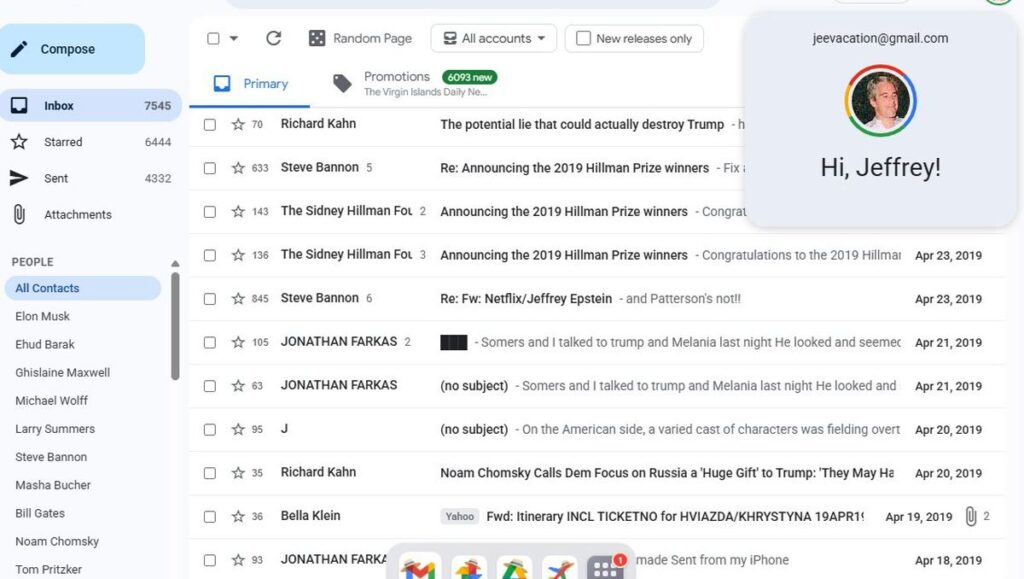
To solve this problem, a new website called Jmail.world has emerged. The platform reorganizes the Epstein Files into a familiar, email-style interface that looks similar to Google’s Gmail, making large data sets easier to browse and search.
This article explains what Jmail.world is, how it works, what data it contains, and why it has become widely discussed online.
Table of Contents
- What Is Jmail.world?
- Why the Epstein Files Are Hard to Navigate
- How Jmail.world Organizes the Data
- Features Inside the “J-Suite”
- Redaction Issues and Data Exposure Concerns
- Public Figures Named in the Files
- Why Jmail.world Matters
- Important Context and Legal Clarification
- External Resources
What Is Jmail.world?
Jmail.world is a web-based tool created by software engineer Luke Igel and internet artist Riley Walz. The platform reorganizes publicly released Epstein-related documents into a searchable system that closely resembles an email inbox.
Instead of forcing users to read thousands of poorly scanned PDF files, Jmail.world presents the material in a structured format that feels familiar to anyone who has used email.
The site was launched in late 2025 shortly after a major release of Epstein-related files by U.S. authorities.
Why the Epstein Files Are Hard to Navigate
The U.S. Department of Justice and the U.S. House Oversight Committee have released more than:
- 3 million pages of documents
- 180,000 images
- 2,000+ videos
- Thousands of emails and attachments
Most of this data exists as low-quality PDFs or scanned images. Searching names, dates, or connections manually is time-consuming and frustrating for the average user.
Jmail.world addresses this problem by converting scattered records into readable, searchable content.
How Jmail.world Organizes the Data
The platform uses optical character recognition (OCR) and automated text processing to extract readable text from public records.
Emails are displayed in a Gmail-style inbox, complete with folders like:
- Inbox
- Starred
- Sent
Users can click individual messages, search keywords, and review correspondence chronologically.
Importantly, the site states that it uses only officially released public records, not leaked or hacked material.
Features Inside the “J-Suite”
| Tool | Purpose |
| JMail | Browse Epstein-linked emails |
| JPhotos | Image gallery of released photographs |
| JDrive | Access millions of documents and PDFs |
| JFlights | View flight logs and travel data |
| JAmazon | Lists shopping and purchase records |
| Jotify | Audio recordings released by authorities |
These tools allow users to cross-reference documents, images, and communications in one place.
Redaction Issues and Data Exposure Concerns
Recent analysis has revealed that some released files were not fully redacted.
Cybersecurity researcher Mahmoud Al-Qudsi, founder of NeoSmart Technologies, discovered that certain documents contained raw base64 email data. This data format is used by email systems to encode attachments.
In select cases, researchers were able to decode the raw data and reconstruct attachments that were meant to remain obscured.
While this issue affects only a limited number of files, it has raised concerns about insufficient redaction practices during large-scale public disclosures.
Public Figures Named in the Files
The Epstein Files reference many well-known individuals from politics, business, and entertainment. These mentions include emails, photographs, travel logs, or meeting references.
Notable names appearing in the records include:
- Bill Clinton
- Donald Trump
- Bill Gates
- Elon Musk
- Prince Andrew
- Kevin Spacey
- Woody Allen
Several individuals have publicly denied involvement in Epstein’s crimes.
The documents mainly illustrate associations, communications, or social interactions.
Why Jmail.world Matters
Jmail.world has gained attention because it lowers the barrier to public access.
Instead of relying solely on summaries or interpretations, users can:
- Search original documents
- Read emails directly
- Review images and logs themselves
This transparency has helped shift public discussion from speculation toward primary-source review.
At the same time, the platform has intensified debates around privacy, ethics, and responsible data publication.
Important Context and Legal Clarification
Jeffrey Epstein was arrested in 2019 on federal sex trafficking charges and died later that year while in custody. Authorities ruled his death a suicide.
The released files document investigations, associations, and communications, not final judgments against most named individuals.
Allegations and conspiracy theories continue to circulate online, but official agencies have stated that claims should be evaluated based on verified evidence, not assumptions.
ALSO READ : The Ultimate Guide to the Milan-Cortina 2026 Winter Olympics