








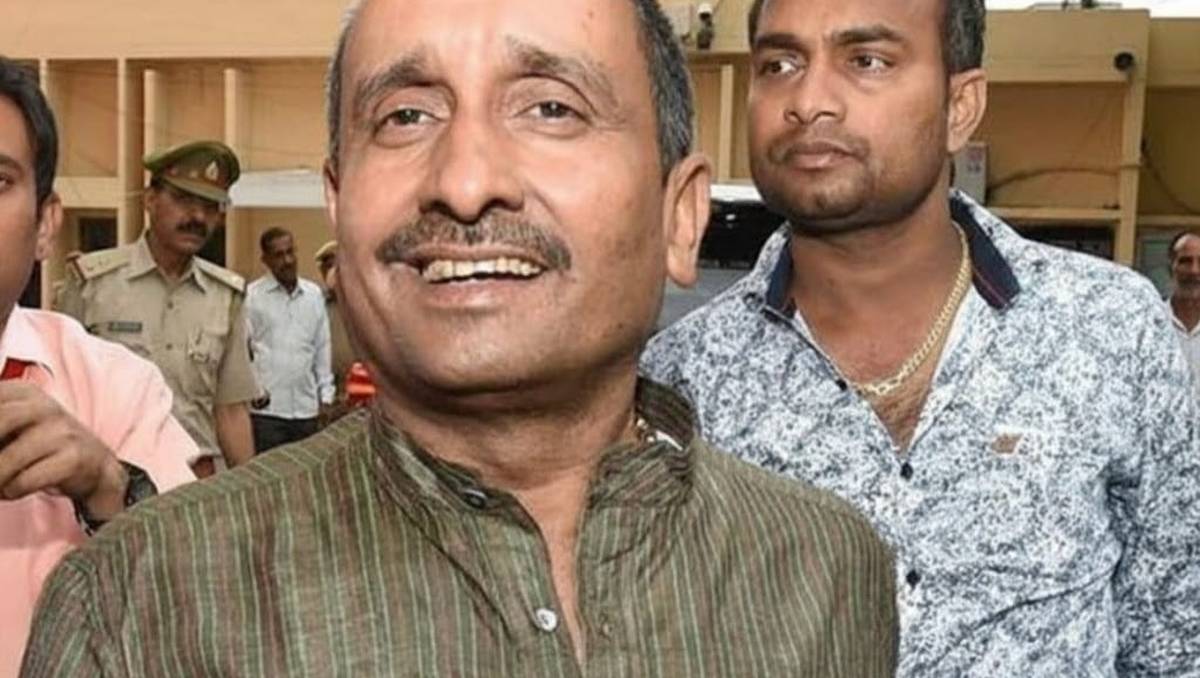

In a significant legal development on December 29, 2025, the Supreme Court of India stayed the Delhi High Court’s order that had granted bail and suspended the life sentence of expelled BJP leader Kuldeep Singh Sengar. This decision ensures that Sengar remains in custody while the apex court examines critical legal questions regarding the accountability of elected officials under the Protection of Children from Sexual Offences (POCSO) Act.
Table of Contents
- The Supreme Court’s Intervention
- The Legal Debate: Who is a ‘Public Servant’?
- Key Arguments from the CBI
- Legal Aid and Victim Protection
- Case Background and Timeline
The Supreme Court’s Intervention
The ruling was delivered by a three-judge bench comprising Chief Justice of India Surya Kant, Justice JK Maheshwari, and Justice AG Masih. The bench was responding to petitions filed by the Central Bureau of Investigation (CBI) and legal advocates challenging the Delhi High Court’s recent decision to suspend Sengar’s sentence.
While courts are generally hesitant to stay bail orders without hearing the convict, the Supreme Court noted “peculiar facts” in this instance. Crucially, Sengar is already serving a separate 10-year sentence for the culpable homicide of the survivor’s father. Therefore, the stay ensures he remains behind bars while the legal validity of his bail is debated.
The Legal Debate: Who is a ‘Public Servant’?
The primary reason for the stay involves a complex interpretation of the POCSO Act. The Delhi High Court had previously suggested that Sengar might not fall under the definition of a “public servant” as outlined in certain aggravated offence provisions. This interpretation would effectively reduce the severity of the legal charges against him.
However, Chief Justice Surya Kant raised a poignant concern during the hearing. He remarked that if an MLA is excluded from the definition of a public servant, it would create a disparity where low-ranking officials like a police constable or patwari are held to stricter standards than high-ranking legislators.
Key Arguments from the CBI
Solicitor General Tushar Mehta, representing the CBI, emphasized that the POCSO Act is a special welfare legislation. His arguments focused on three main pillars:
- Abuse of Dominance: Aggravation in sexual assault cases occurs when the offender uses their position of power to exploit a minor. Sengar, as a powerful local MLA, held undeniable dominance.
- Purposive Interpretation: The law must be interpreted to advance the protection of children rather than allowing technical definitions to dilute justice.
- Public Confidence: Releasing a powerful convict in such a sensitive case could undermine public trust in the criminal justice system and pose a threat to the survivor.
Legal Aid and Victim Protection
The Supreme Court reaffirmed its commitment to the survivor’s safety and rights. The bench ordered that:
- The Supreme Court Legal Service Committee will provide the survivor with free legal aid if she requires it.
- The survivor has a statutory right to file her own appeals (Special Leave Petitions) independently.
Case Background and Timeline
The Unnao case has been one of India’s most high-profile criminal trials involving a political figure. Below is a summary of the key milestones:
| Year | Event Summary |
|---|---|
| 2017 | Minor girl reports rape by Kuldeep Singh Sengar in Unnao, UP. |
| 2019 | Special CBI Court convicts Sengar; sentences him to life imprisonment. |
| 2020 | Sengar is sentenced to 10 years for the homicide of the survivor’s father. |
| Dec 2025 | Delhi HC suspends sentence; Supreme Court stays the order on Dec 29. |
The Supreme Court has granted four weeks for counter-affidavits to be filed, ensuring that the legal definition of “public servant” under the POCSO framework will soon be clarified for the entire nation.
External Resources:National Legal Services Authority (NALSA) – Free Legal Aid
Read the full POCSO Act 2012